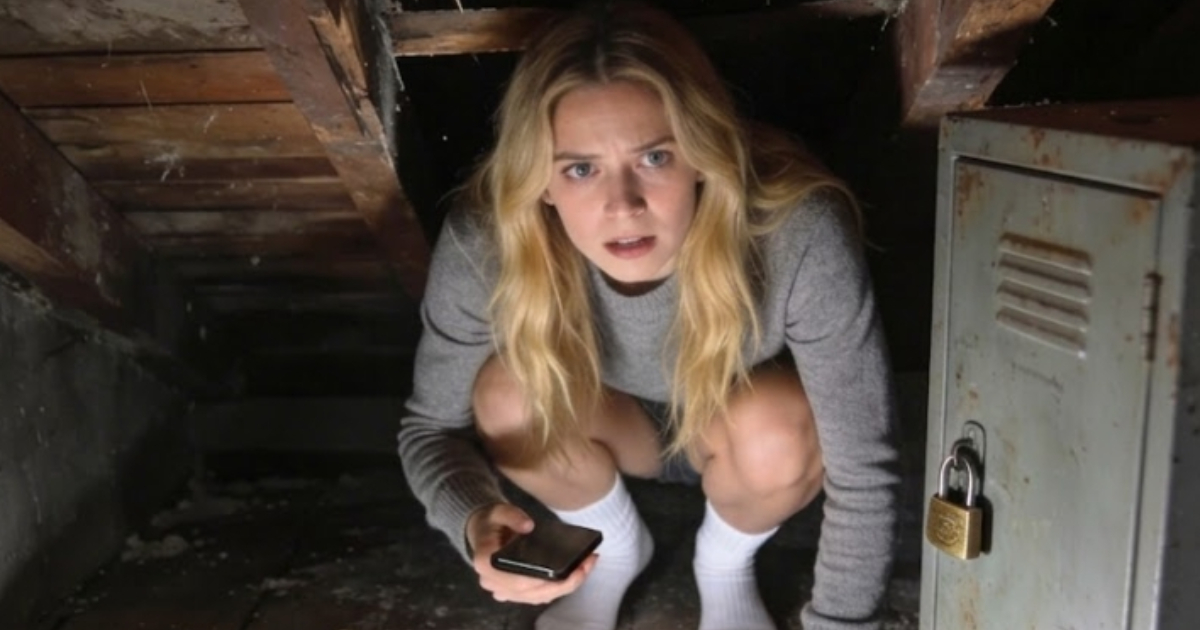
Liza had been hiding in the attic for almost an hour. The old wooden floor creaked beneath her feet whenever she moved, so she sat perfectly still beside a rusty metal cabinet, barely daring to breathe. Her hands trembled as she clutched her phone with the screen turned off. Down below, she could hear voices moving through the house. They were looking for her.
Just a few hours earlier, she had accidentally overheard an argument between the people she had called her parents for her entire life. The panic in their voices had frightened her enough to run upstairs and hide before anyone noticed she was listening. Now she listened again. “Check the bedrooms,” a man said below. “We have to find her before she leaves,” a woman replied.
Liza pressed herself against the wall. Then the conversation changed. “We should have told her years ago,” the man said quietly. A long silence followed. “No,” the woman answered. “We promised we would never tell her.” Liza felt her heart pounding harder. Tell her what? She leaned closer to the attic opening. The next words made her freeze. “She’s not our daughter.”
For a moment, everything seemed to stop. Liza felt as if the air had vanished from the room. Tears filled her eyes. She wanted to believe she had heard wrong. But then the man spoke again. “We found her when she was three. She was alone after the accident.” The woman began crying. “We tried to find her family. We really did.”
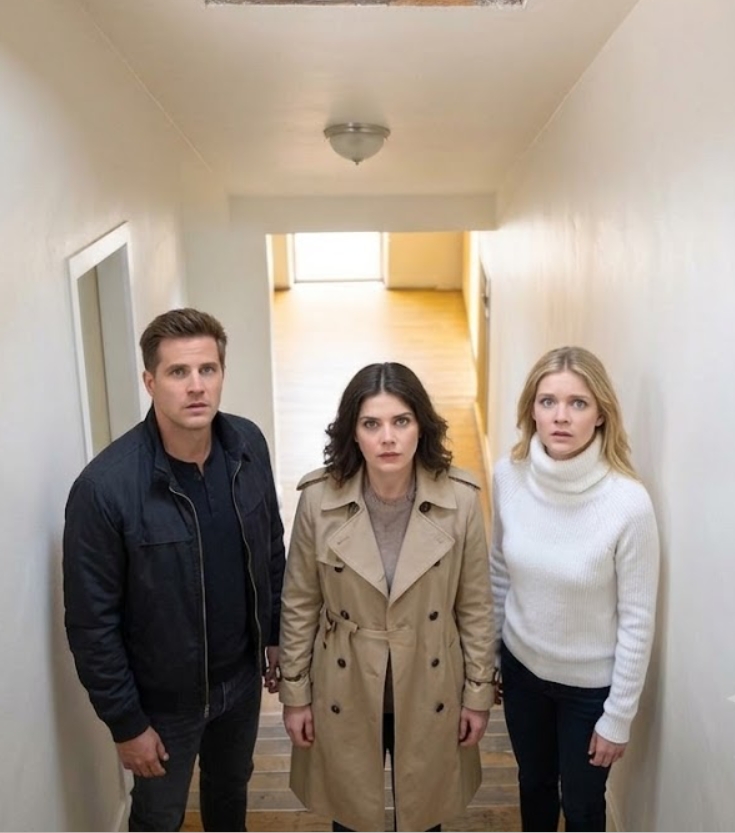
Liza covered her mouth to keep from making a sound. Her entire life suddenly felt uncertain. Just then her phone slipped from her hand. It struck the wooden floor with a loud crack.
Silence. Every voice downstairs stopped. Then footsteps rushed toward the attic ladder. Liza knew there was nowhere left to hide.
The attic door opened, and the man climbed up first. He found her curled against the wall, tears streaming down her face. For several seconds nobody spoke. Finally Liza whispered, “Was it true?” The woman climbed up behind him, crying openly now. “Yes,” she said. Liza looked from one face to the other. “Then who am I?”
The man sat down beside her. “You are the little girl we raised. The girl we loved every day for fifteen years.” He carefully handed her an old envelope. Inside were photographs, newspaper clippings, and documents. Together they told the story of a car accident that had happened years ago. Liza’s biological parents had died that night. No relatives had ever been found. After months of searching, the couple had adopted her.
“We wanted to tell you when you were older,” the woman said. “But every year it became harder. We were afraid you’d think we weren’t your real family.”

Liza stared at the photographs for a long time. Then she looked at the two people sitting in front of her—the people who had stayed up with her when she was sick, the people who had taught her to ride a bicycle, the people who had loved her through every mistake and every success.
Slowly, she stood up. The woman looked terrified. Then Liza wrapped her arms around both of them. “You should have told me,” she whispered through tears. “We know,” the man replied.
For the first time that day, nobody tried to hide anything. They sat together in the dusty attic for a long time, sharing the truth that had been buried for years. The secret had changed Liza’s understanding of her past, but it had not changed the one thing that mattered most.
Family was not only the people who gave you life. Sometimes it was the people who spent their lives loving you. And as the three of them finally walked downstairs together, Liza realized she had not lost her family that day. She had simply learned the whole story of how she found it.