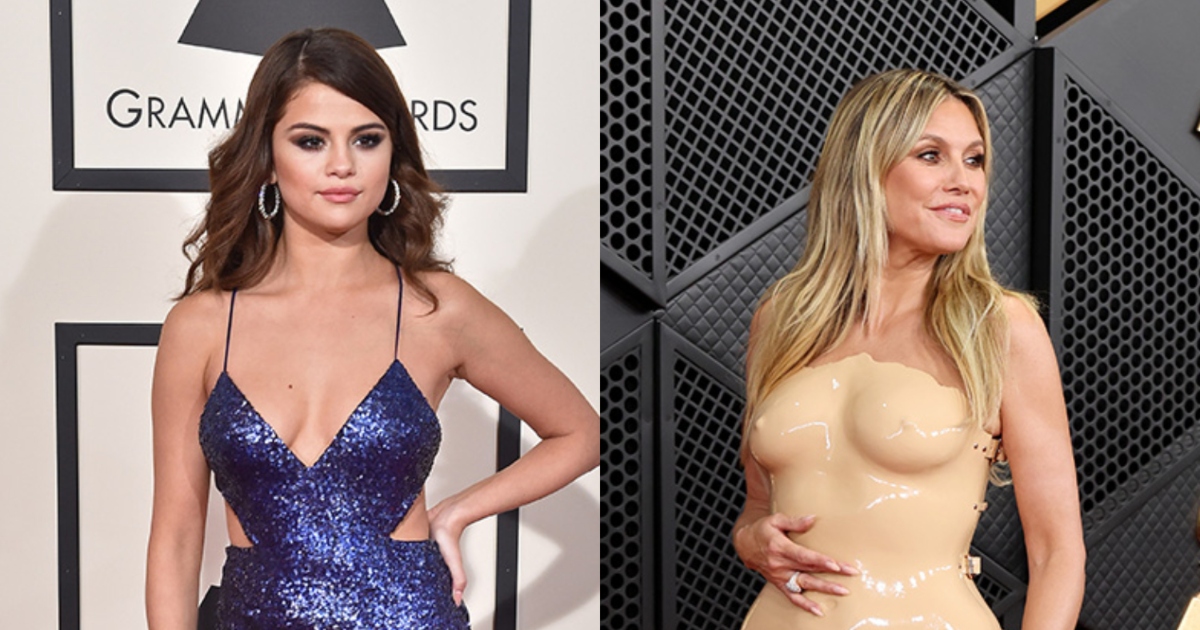
The shift in the air at the Crypto.com Arena this week was palpable, a seismic departure from the structured formality we once knew. To look back at the 2016 Grammys is to revisit an era of protective layers—the sweeping trains of Adele’s Givenchy and the heavy, red Romona Keveza silk worn by Ariana Grande. Back then, elegance was a performance of “more is more” fabric.

But in 2026, the sweep of a train has been replaced by the transparency of the truth. We’ve moved from staples to skin, trading the safety of floor-length silhouettes for a radical, anatomical autonomy.

If 2016 was the final stand of traditional glamour—where even Zendaya’s tuxedo was a rebellion through sharp tailoring—2026 is the year the mannequin became the masterpiece. The transition is staggering. We’ve traded the “polished past” of Selena Gomez’s sequins for a landscape where skin is the primary fabric. This isn’t just a change in hemlines; it’s a barometer of our cultural psyche.

At the heart of this Decade of Exposure lies a philosophy of “Anatomy as Autonomy.” Psychologists suggest that in a world of global unrest, the move toward “bare” fashion is a reclamation of personal freedom. When Heidi Klum steps out in a hyper-realistic latex mold of her own body, or Chappell Roan arrives in a translucent Mugler gown suspended by nipple rings, they aren’t just seeking shock value.

They are asserting a rebellious power over their own forms. What was once a “wild anomaly”—like Cher’s legendary 1974 naked dress or Lady Gaga’s 2016 Bowie tribute—has become the guiding philosophy for modern icons like Karol G and Yungblud.


The norms of the past have dissolved into a future focused on the unvarnished self. As we look toward the next decade, it’s clear that the Grammys remain the ultimate barometer of our social evolution. In 2026, the most luxurious thing an artist can wear isn’t a diamond-encrusted gown; it’s the staggering courage to be seen, entirely and unapologetically, as they are.