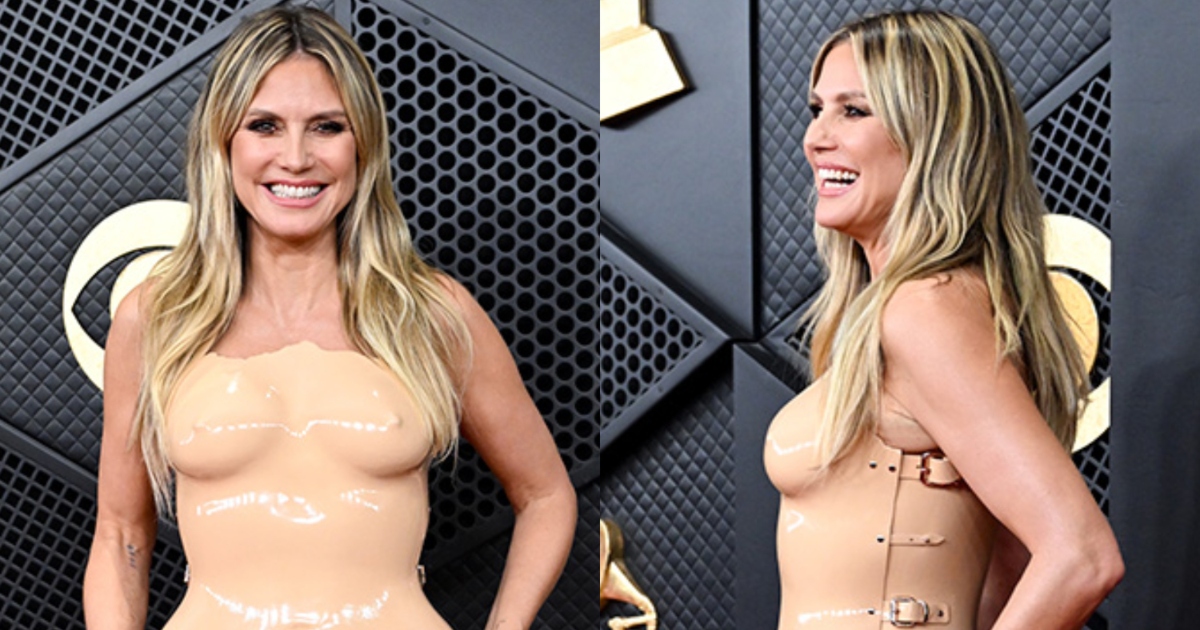
The kinetic energy of the 2026 Grammys reached a fever pitch at the Crypto.com Arena, but the atmosphere didn’t truly shift until Heidi Klum arrived. Stepping onto the carpet in a custom Marina Hoermanseder creation, she didn’t just wear a dress; she inhabited an anatomical event.
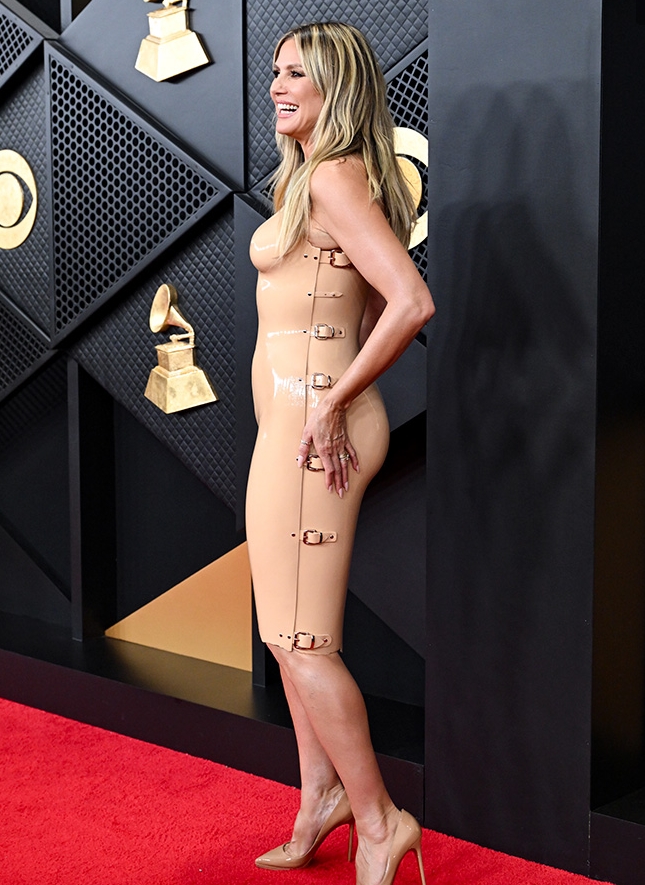
Crafted from stiff, lacquered leather molded to a 3D scan of her own frame, the piece functioned as a provocative second skin. With hyper-real abdominal contours and a sculpted faux belly button, Heidi successfully moved the “naked dress” from mere fabric into the realm of human sculpture.
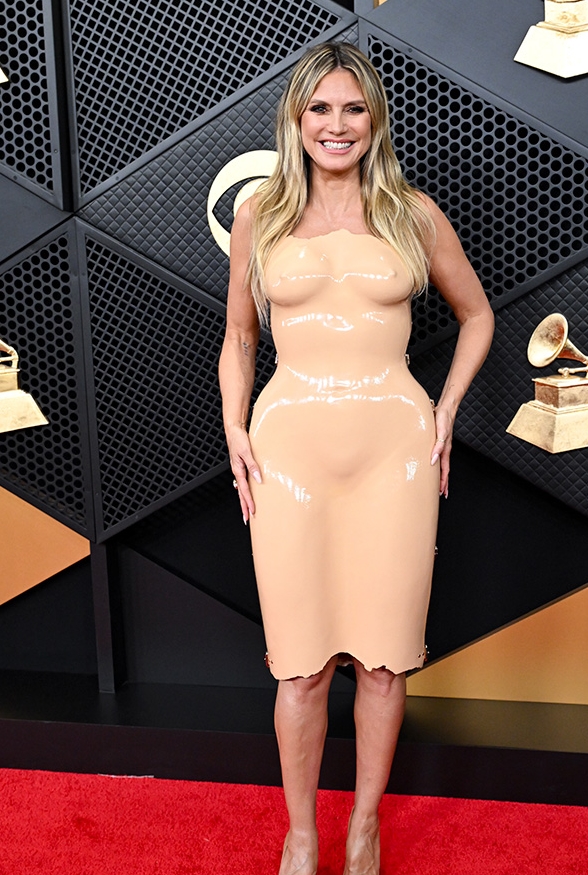
The night’s glamour, however, came with a gritty dose of physical sacrifice. The rigid structure of the leather and the industrial side buckles meant that sitting was a mechanical impossibility. As she navigated the carpet, Heidi was forced into restricted “baby steps,” a cautious shuffle that became the price of admission for a woman who refuses to play it safe. She famously joked that she would be providing a “standing ovation all night,” proving that for a veteran of the shock-and-awe school of branding, comfort is a distant second to visibility.
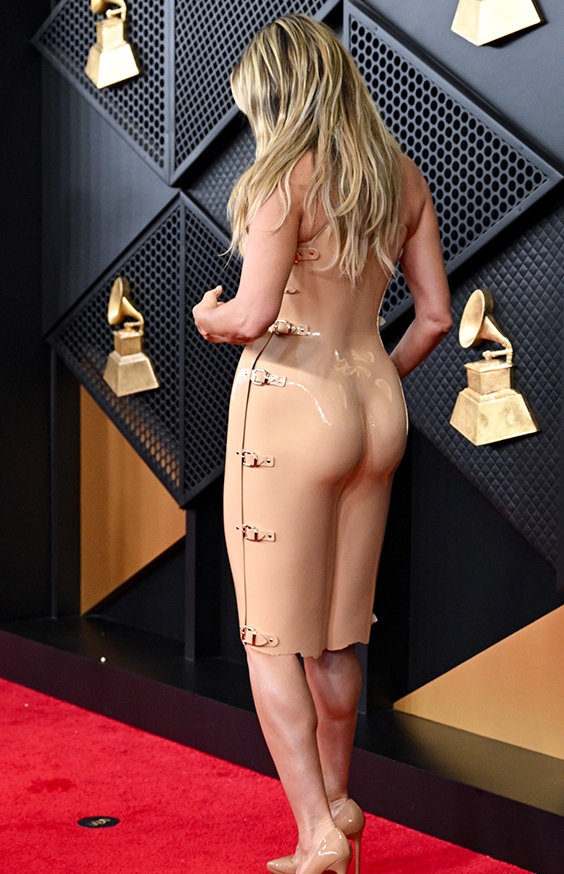
Of course, the internet’s reaction was unsparing, with detractors lobbing comparisons to everything from “liquid wax” and “cheese fondue” to the textured rubber of a sterile glove. Yet, in a provocative year where Chappell Roan donned a sheer, pierced Mugler look and Teyana Taylor favored waist-cinching cutouts, Heidi’s look did exactly what art is supposed to do: it made the world feel something visceral.
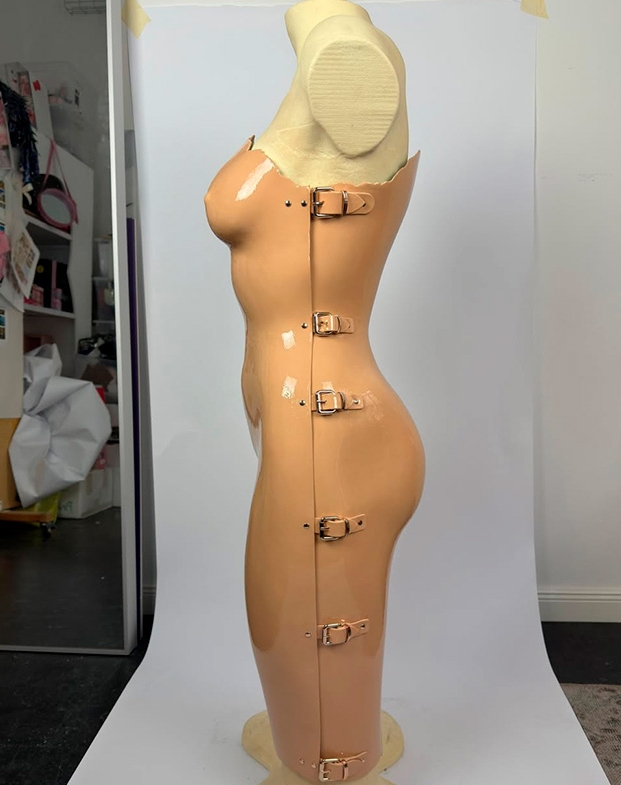
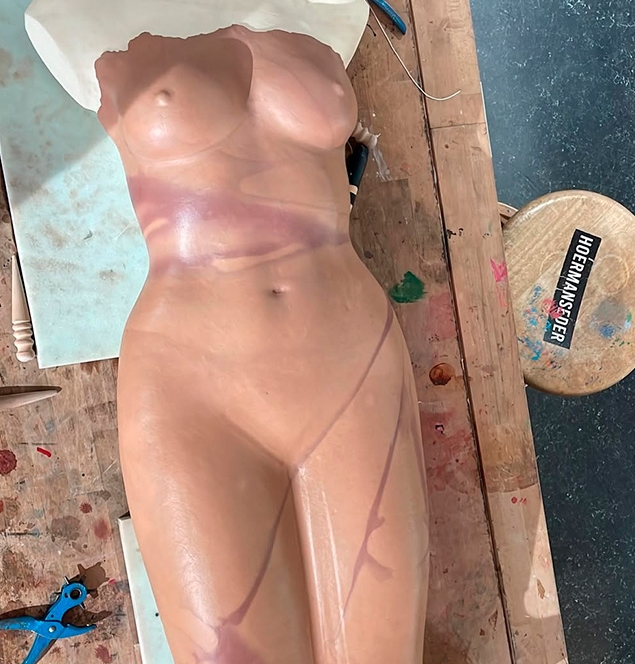
While critics saw a costume, Heidi saw a masterpiece of modern visibility. By leaning into the “baby step” reality and the “liquid” aesthetics, she reinforced her status as an icon who is beyond competition. In a landscape of merely pleasant fashion, Heidi Klum reminds us that the most luxurious thing you can own is the courage to stand up all night just to keep the conversation going.