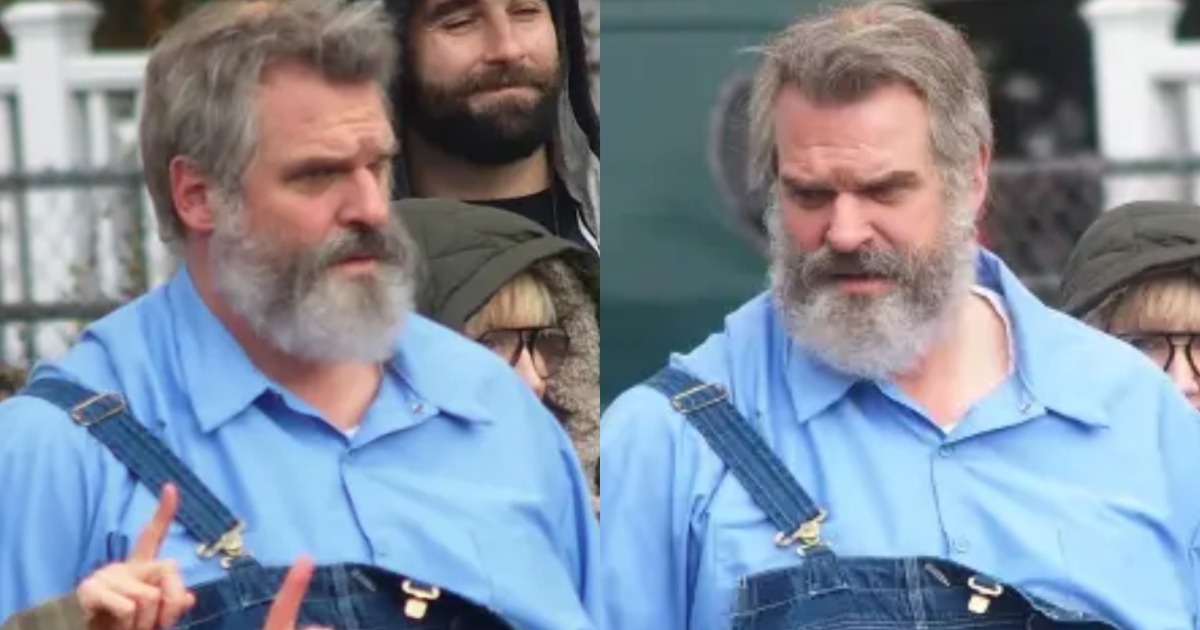
In the creeping gray of a New Jersey morning, a silhouette emerges from the fog that feels less like a movie star and more like a ghost from a 2003 nightmare. David Harbour stands on the Woodbridge set of Evil Genius, swallowed by blue denim overalls and a heavy, disheveled stillness. He is no longer the imposing sheriff or the brawny action hero.
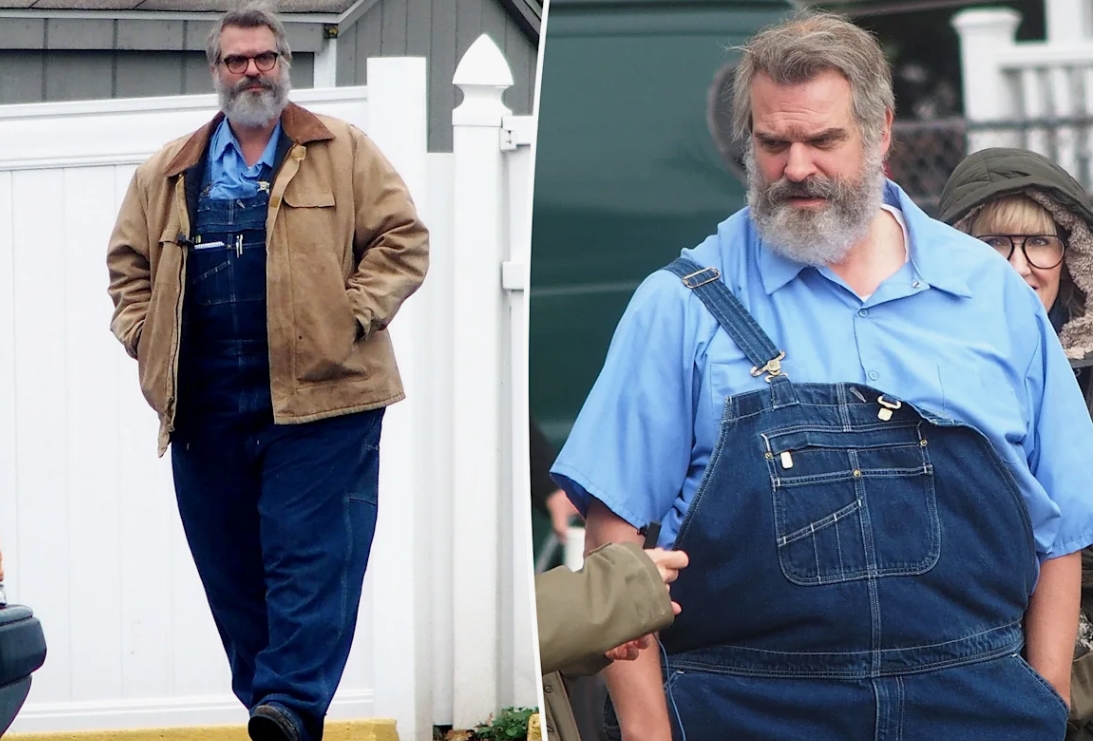
He has become Brian Wells, the Erie pizza delivery man who walked into a bank with a ticking iron collar around his neck and a scavenger hunt in his hand.
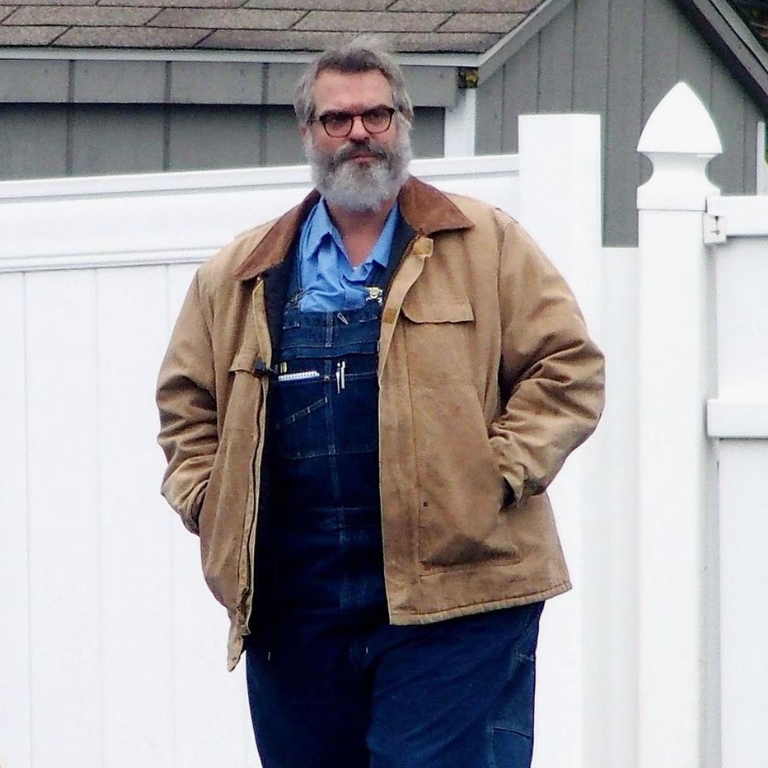
Harbour’s transition into this haunted, fragile space is meticulous. After years of brutalizing his body—the fasting-induced anxiety that dropped him 80 pounds for Stranger Things followed by the poutine-fueled bulk for Violent Night—he has finally drawn a line. He chose the suit. This prosthetic padding isn’t a shortcut; it’s armor.
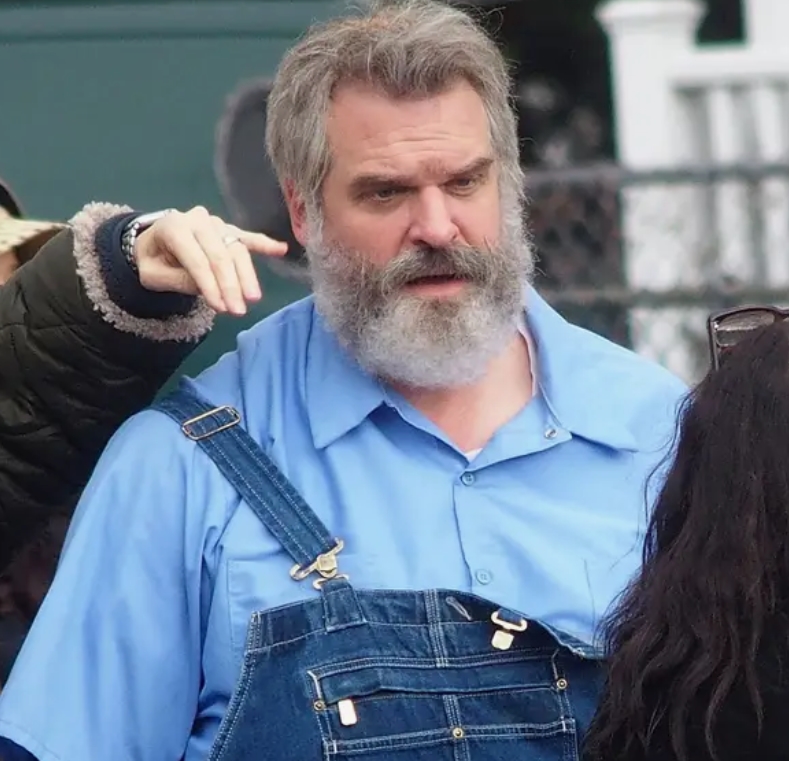
It is a boundary he has set to protect the man while exposing the victim. By utilizing a high-tech silhouette rather than dangerous weight cycles, he is preserving his health to better inhabit Wells’ isolation.

The “Pizza Bomber” legacy is a jagged piece of Americana, a story of people on the fringes pulled into a diabolical game. Under Courteney Cox’s direction, Harbour isn’t just wearing a costume; he is wearing the visceral weight of a man trapped. The gray beard and the slumped shoulders aren’t just for continuity—they are the visual language of a human story that ended in a parking lot while the world watched.

He is disappearing. He has traded his strength for a terrifying vulnerability, proving that being unrecognizable isn’t about the makeup. It’s about the erasure of the star until all that remains is the tragedy of the man.