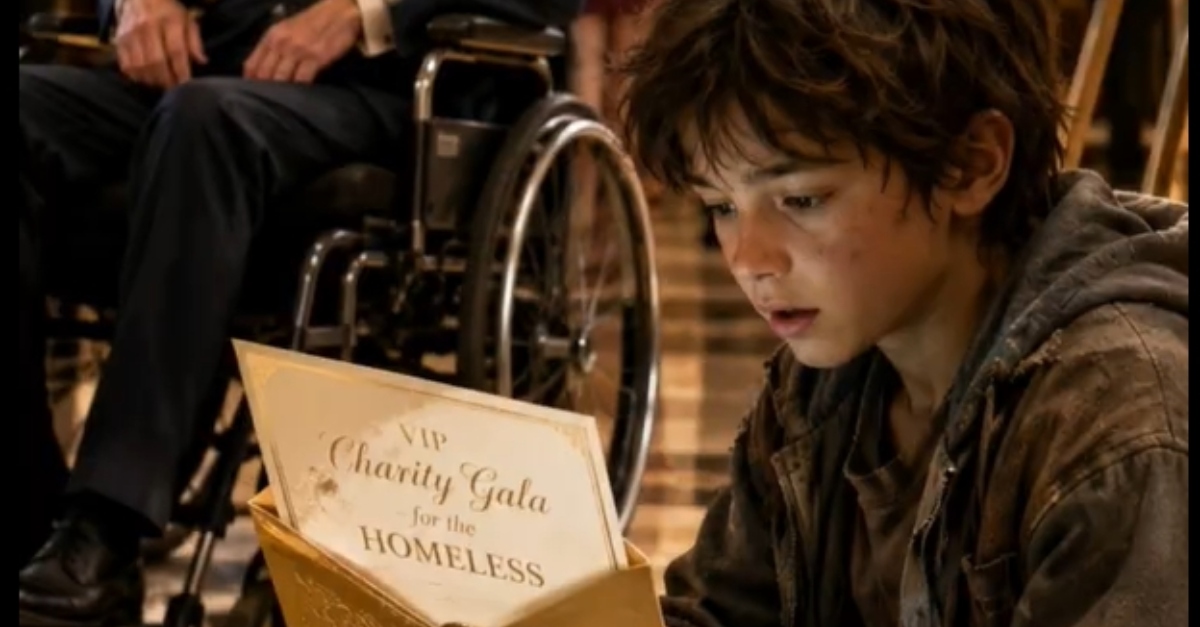
The sidewalk was bustling with the midday rush, a sea of polished shoes and hurried strides that rarely slowed for anything, least of all for those inhabiting the margins. Among the crowd stood a man who radiated the kind of quiet power that only extreme wealth can buy, his tailored suit cutting a sharp silhouette against the grey concrete. As he checked his watch and lunged toward the heavy glass doors of a corporate high-rise, a heavy, cream-colored object slipped from his pocket. It hit the ground with a soft thud, unnoticed by the owner but caught instantly by the keen eyes of a boy sitting nearby in the shadow of an alleyway.
The boy, whose clothes were a map of stains and weathered fabric, waited for the crowd to thin before darting out to claim the prize. He expected a wallet, perhaps thick with the currency that kept this city turning, but instead, he held a thick, gold-embossed envelope. The paper felt heavy and expensive, a stark contrast to the rough skin of his hands. With trembling fingers, he pried open the seal, expecting a private letter or a legal document. Instead, he pulled out a card that shimmered under the city lights: a VIP invitation to the “Annual Charity Gala for the Homeless.”
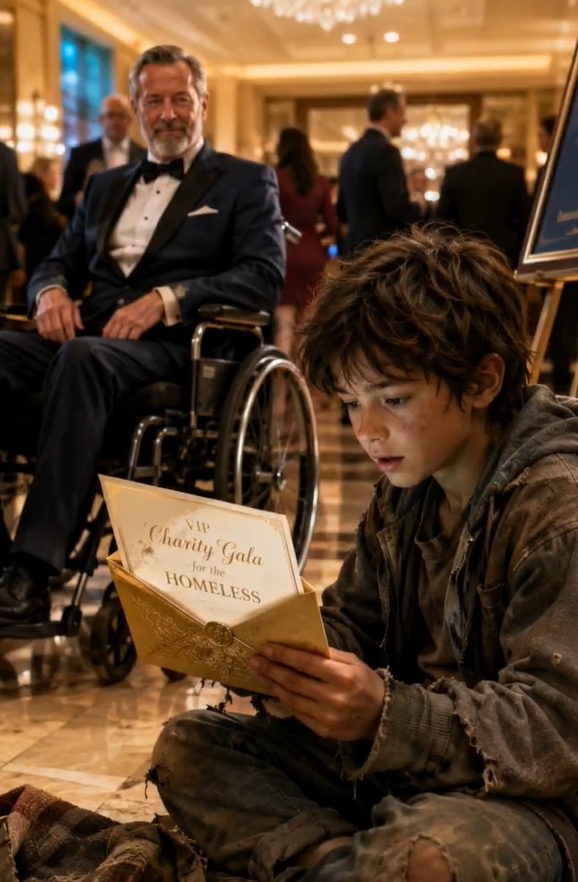
The irony wasn’t lost on him. Here was a ticket to a world that claimed to care about his existence, yet he knew the doormen at the venue would likely chase him away before he could even reach the stairs. He looked at the date—it was for that very evening. A flicker of something he hadn’t felt in a long time, a mix of defiance and curiosity, sparked in his chest. He didn’t want the food or the pity; he wanted to see if the people behind the gold-embossed paper actually saw the faces they were supposedly saving. He spent the afternoon cleaning himself as best he could at a public fountain, smoothing his hair with water and tucking his oversized shirt into his frayed trousers.
When he arrived at the grand ballroom of the Pierre Hotel, the spectacle was blinding. Men in tuxedos and women draped in silk laughed over crystal flutes of champagne, their voices rising in a melodic hum of self-congratulation. The boy slipped through a side entrance used by the catering staff, blending into the shadows of a velvet curtain. From his vantage point, he saw the man from the sidewalk standing on a small stage, adjusting a microphone. He was the keynote speaker, the benefactor whose name was synonymous with the night’s cause.
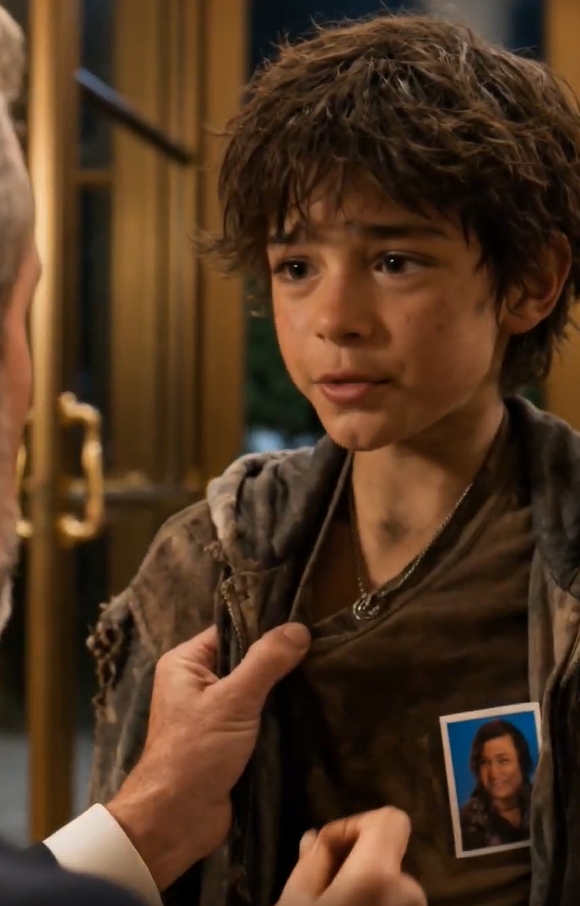
The man began to speak about “the invisible members of our society” and the “noble duty of the fortunate.” His words were eloquent, yet they felt like a script practiced in front of a mirror. As the applause thundered through the hall, the boy stepped out from behind the curtain. He didn’t shout or cause a scene; he simply walked toward the front of the stage, holding the gold-embossed envelope high. The room fell into an awkward, suffocating silence as the “invisible” became visible. Security moved to intervene, but the man on stage held up a hand, his face paling as he recognized the boy from the street corner.
The boy reached the edge of the stage and handed the envelope back to its owner. “You dropped your invitation to see me,” he said, his voice quiet but steady enough to carry through the hushed room. The man looked down at the boy, then at the invitation, and finally at the sea of wealthy faces staring back at them. The artifice of the evening shattered. In that moment, the man didn’t see a cause or a tax write-off; he saw a person. He stepped down from the podium, took the boy’s hand, and led him to the empty seat at the head table. The gala continued, but for the first time, it wasn’t a performance. It was a conversation that started with a returned envelope and ended with the promise of a life changed.