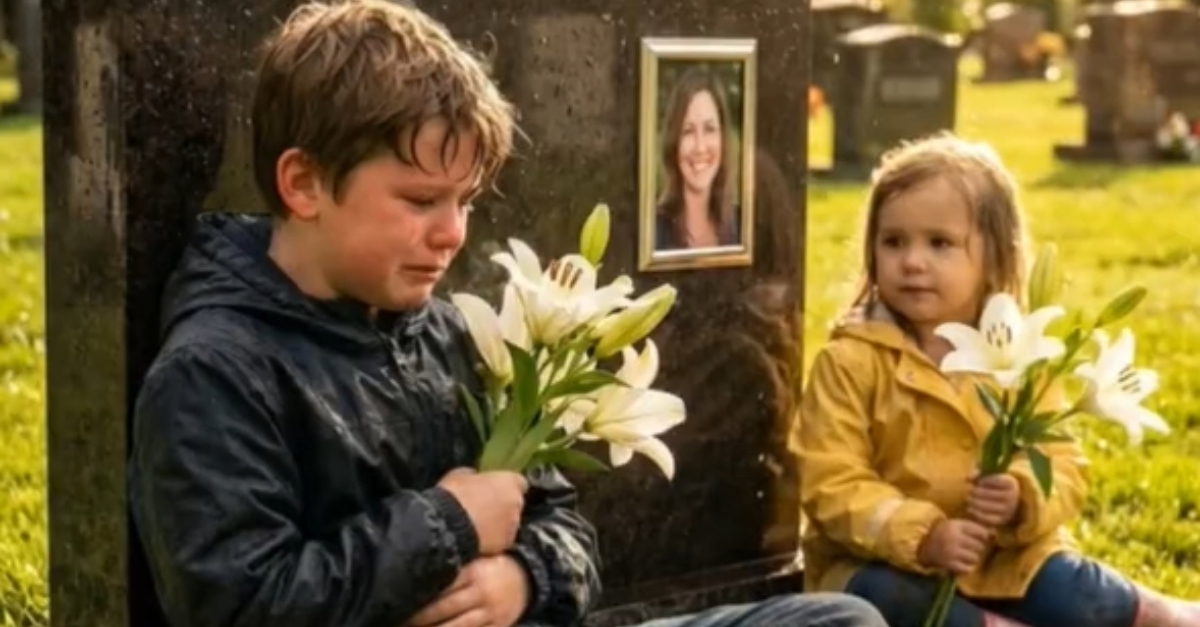
Every Saturday morning, eight-year-old Leo would trek up the winding path of the local cemetery, clutching a bundle of bright yellow carnations. To the rest of the world, he was just a quiet boy standing before a cold piece of granite, but to Leo, these visits were the highlight of his week. He would sit cross-legged on the grass and recount everything: the spelling bee he almost won, the scraped knee from recess, and how the house felt a little too quiet without her humming in the kitchen. He lived in a world where her memory was a living thing, kept afloat by the steady rhythm of his voice.
One Tuesday, an unexpected storm rolled in, painting the sky a heavy charcoal gray. Driven by a sudden, inexplicable urge to share the sound of the rain with her, Leo grabbed his umbrella and his usual flowers, hurrying to the familiar plot. As he rounded the corner of the weeping willow, he stopped short. A young girl, perhaps a year older than him, was already there. She was drenched, her hair clinging to her cheeks, and in her lap rested a cluster of yellow carnations that looked identical to his own.
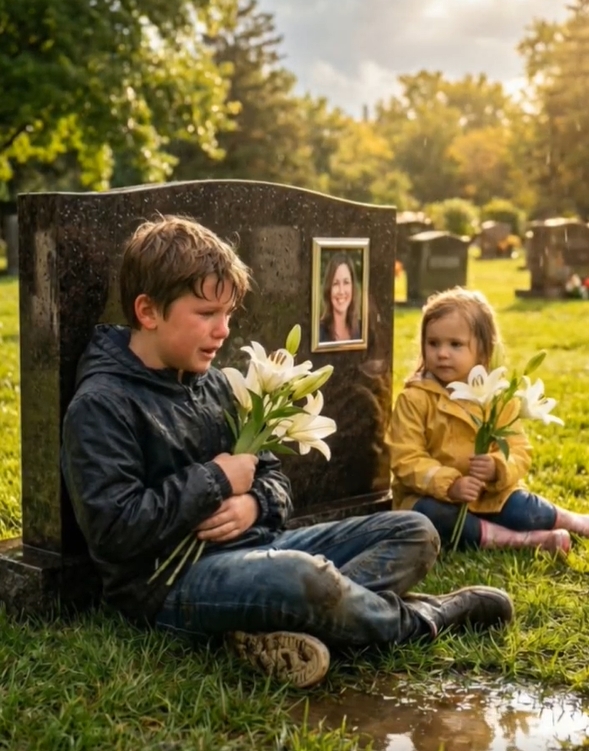
The air felt thick with a sudden, sharp confusion. Leo approached slowly, the splashing of his boots against the mud sounding like a heartbeat. When he reached the edge of the stone, the girl looked up with eyes that seemed far too tired for her age. Leo cleared his throat, his voice trembling slightly as he asked her what she was doing there. She didn’t look angry or surprised; she simply gave him a small, watery smile and whispered that she came every week to talk to her mother.
When Leo pointed out that he was the one who visited this spot, she shook her head gently. She reached out a small hand and brushed the moss away from the oval ceramic portrait embedded in the stone. “See?” she said softly. “This is her.” Leo leaned in, his breath catching in his throat. He looked at the face in the photograph—a woman with high cheekbones and a distinctive mole above her lip. In an instant, the world tilted. He realized with a jolt of pure vertigo that the woman in the picture was a total stranger.
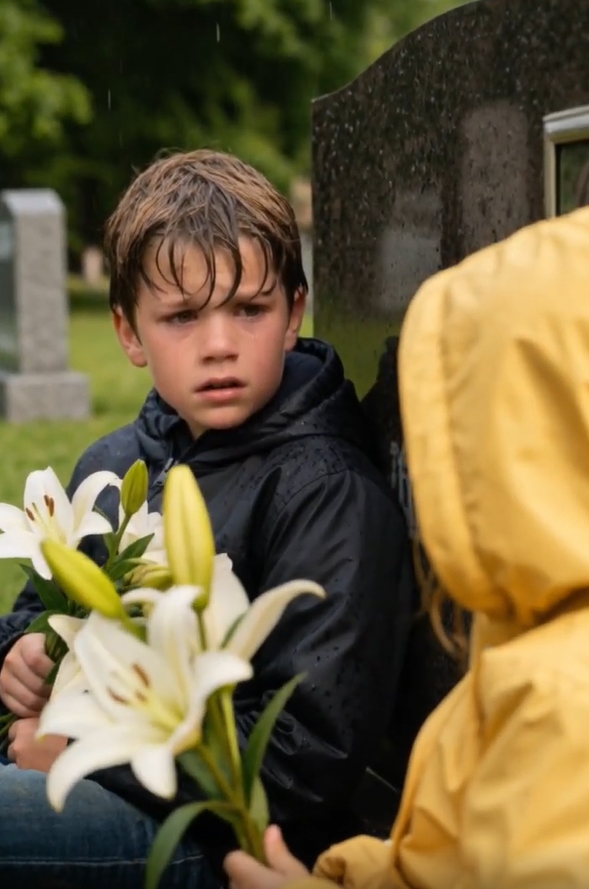
The realization didn’t bring a wave of horror, but rather a profound, quiet clarity. In his grief, Leo had drifted. He remembered the day of the funeral through a fog of tears, the rows of identical gray stones blurring together. He had been coming to the wrong grave for months. He stood frozen, looking from the girl to the flowers, feeling the weight of his mistake. But then, the girl reached out and placed one of her carnations on top of his. She told him that she had seen him there before and that her mother always loved a good story, especially the ones he told about school.
Leo felt a strange warmth spread through his chest, chasing away the chill of the rain. He looked toward the next row of graves and finally saw it: a stone a few yards away, marked with a name that sent a surge of recognition through his soul. He didn’t run to it immediately. Instead, he sat down beside the girl for a moment, and they shared the silence of the afternoon together. He realized that while he had been talking to the wrong stone, he had been heard all the same. With a final nod to the girl and a promise to see her next week, Leo walked over to his mother’s true resting place, laid down his flowers, and started his story from the very beginning.