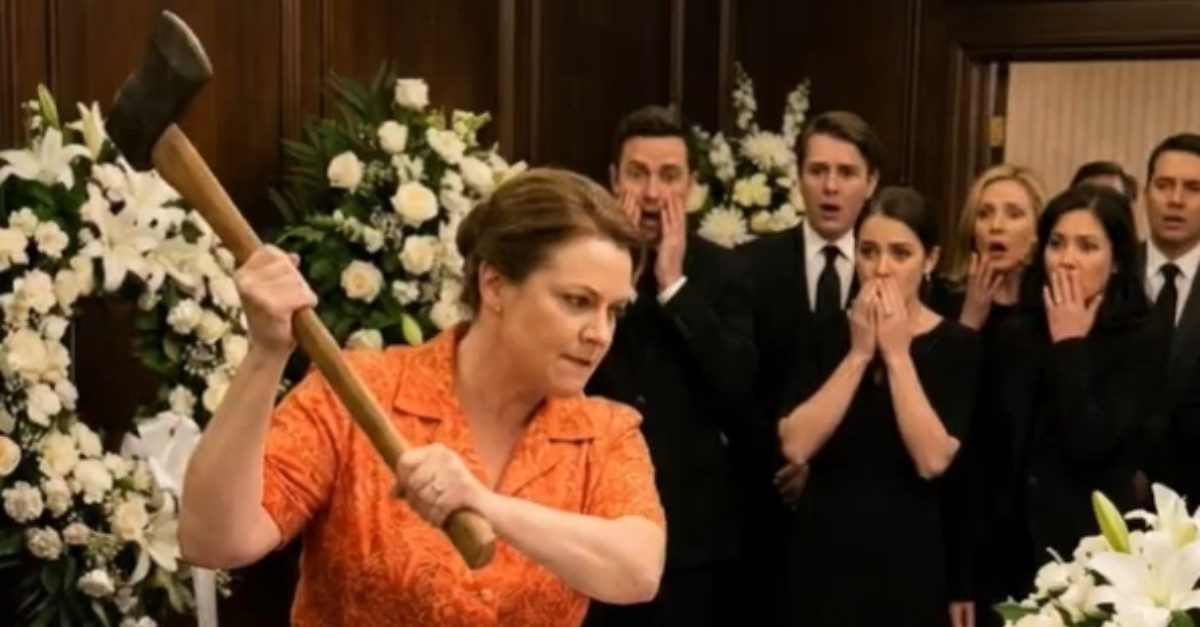
The air in the funeral parlor was thick with the scent of lilies and the stifled sobs of the bereaved, a heavy silence pressing down on the rows of mourners. In the center of the room sat a pristine white casket, polished to a mirror shine and representing the finality of a life cut short. The peace was not broken by a prayer or a eulogy, but by the rhythmic, heavy thud of heels against the carpeted floor. A woman in a vibrant orange dress, her face a mask of frantic determination, marched toward the altar. Before anyone could intervene, she swung a heavy wood-splitting axe high above her head.
The first blow landed with a sickening crack, splintering the lacquered surface of the lid. Gasps of horror rippled through the room as guests rose from their seats, frozen in a mix of shock and indignation. The woman didn’t stop, her breath coming in ragged gasps as she swung again and again, shouting that he wasn’t gone, that they were burying him alive. To the onlookers, it was a psychotic break fueled by grief, a desecration of the most sacred moment of parting.
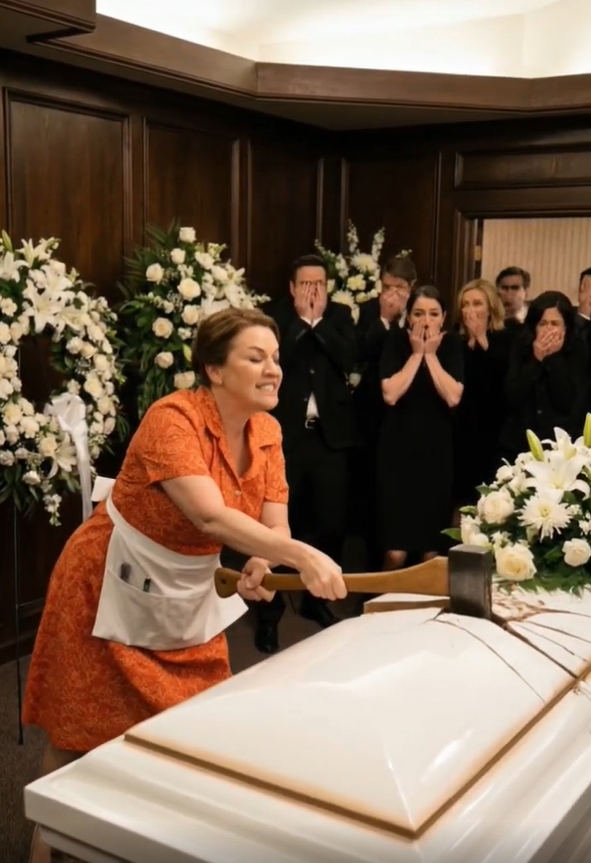
The wood groaned under the repeated assault, white shards flying like hailstones across the velvet rug. “Look at the monitors!” she screamed, though there were no machines in the room to back her claim. Just as the funeral director stepped forward to restrain her, the sound of the axe changed from a sharp strike to a hollow thud. The lid had finally given way, a jagged fissure snaking down the center of the casket. The woman dropped the axe, her hands trembling as she reached for the splintered edge, her eyes wide with a terrifying hope that defied every law of nature.
The room went deathly still as a new sound emerged from within the box—a wet, scraping noise that made the hair on the back of every neck stand up. From the dark interior of the white silk lining, a hand suddenly punched through the fresh crack. It was not the hand of a living man saved from a premature burial; it was a shriveled, ashen limb, the skin pulling tight against bone like rotted parchment. The grey fingers curled around the broken wood with impossible strength, the fingernails jagged and stained.
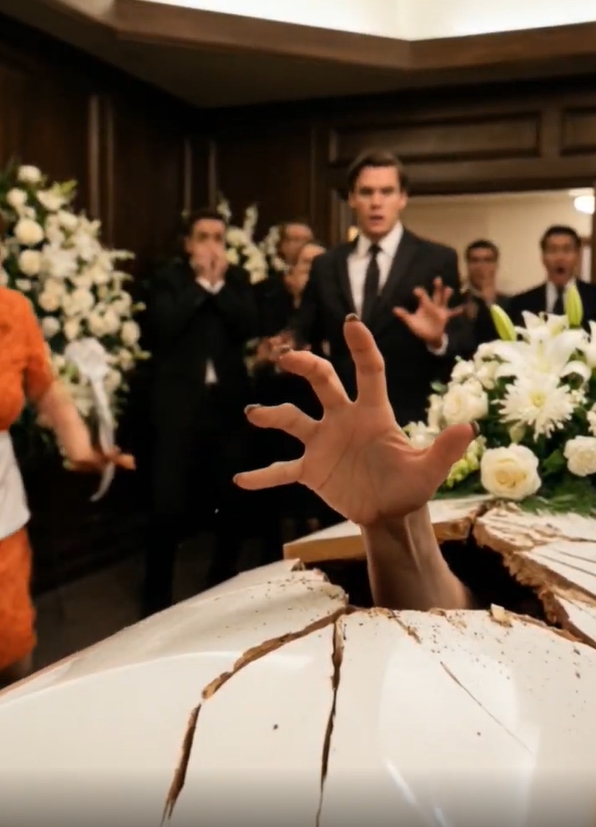
A collective shriek tore through the parlor as the realization dawned on the crowd. This was no miracle of survival. The hand gripped the lid, and with a violent heave, the remaining wood shattered completely. The figure within sat bolt upright, its movements jerky and unnatural, its milky eyes fixed on nothing. The woman in the orange dress backed away, her triumph instantly curdling into a primal, paralyzing fear. She had wanted him back, but the thing that climbed out of the casket was a hollow echo of the man she loved, a vessel for a hunger that didn’t belong in the world of the living.
Panic erupted as the mourners scrambled for the exits, chairs flipping over in the mad dash for safety. The funeral director fled, leaving the woman alone with her creation. The creature turned its head toward her, the dry hinges of its jaw clicking open. In that moment of absolute silence, she realized that some silences are meant to remain unbroken. As the grey hand reached for her throat, she didn’t scream; she simply closed her eyes, finally understanding that while love can move mountains, it cannot—and should not—bridge the gap between the grave and the sun.