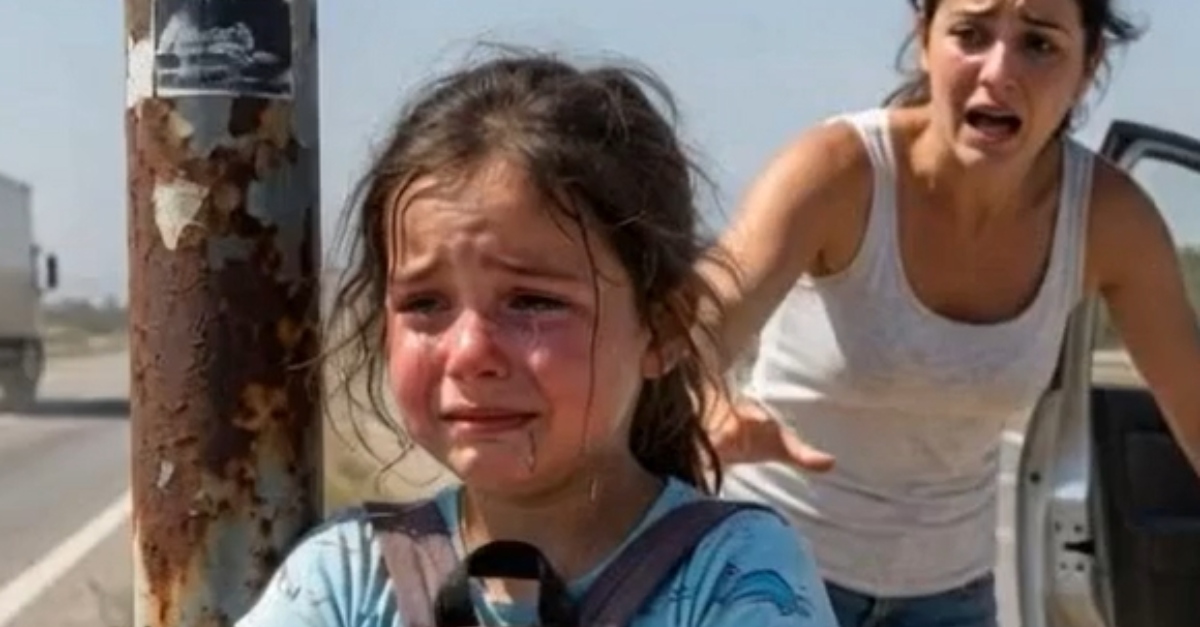
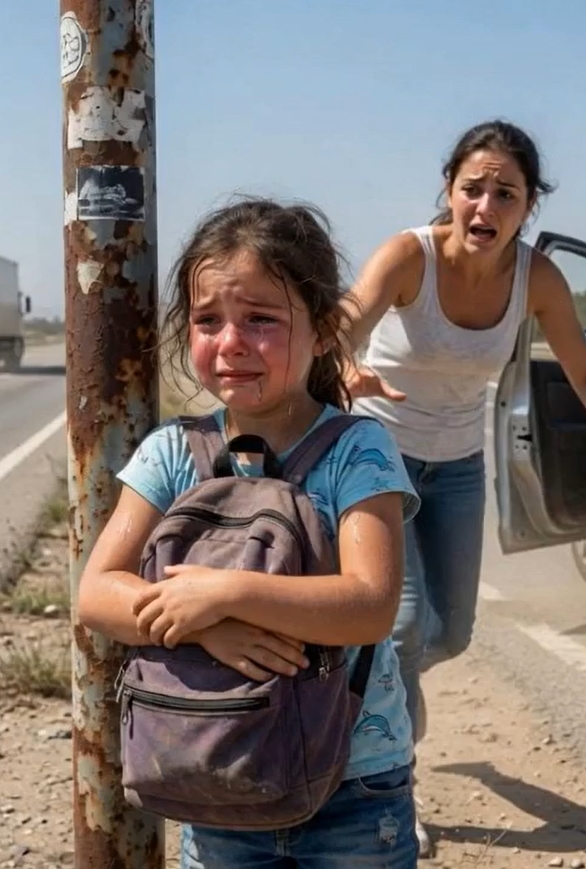
The silence of the highway was absolute, save for the rhythmic humming of tires on distant asphalt and the frantic beating of eight-year-old Lily’s heart. She stood on the gravel shoulder, clutching the hem of her damp dress, the echo of her grandmother’s icy voice still vibrating in the air. “You’re ruining everything,” they had spat, their frustration over a ruined car interior curdling into a cruelty that defied comprehension. When the car door slammed and the engine roared away, leaving her in a cloud of exhaust, the world seemed to tilt on its axis. She was small, she was alone, and the vast, uncaring landscape stretched out in every direction as the sun began to dip toward the horizon.
She wandered a few paces away from the road, seeking the shade of a gnarled oak tree that stood like a silent guardian against the encroaching twilight. The initial shock began to give way to a cold, hard clarity; she knew they were wrong, even if her small mind couldn’t quite articulate why. She wiped the last of the tears from her cheeks, refusing to let them be her final testament. She wasn’t a ruin; she was a girl who had simply been unlucky enough to get sick, and she would not let their anger define the boundaries of her survival. She sat on the grass, watching the headlights begin to flicker like distant stars on the horizon.
A soft rumble approached, not the aggressive growl of her grandparents’ SUV, but the steady, rhythmic chug of a vintage truck. It slowed, the brakes squealing in protest, before pulling onto the shoulder just a few yards away. A man with a face etched by years of weather stepped out, his expression shifting from mild curiosity to deep, immediate concern when he saw the small figure tucked under the tree. He didn’t ask questions that required her to relive the moment; he simply opened the passenger door, offering a clean, oversized jacket and a thermos of cool water. There was no judgment in his eyes, only a quiet, steady resolve that felt like an anchor in her shifting reality.
He drove her to the nearest town, the radio playing low, comfortable jazz that filled the space between them. They stopped at a brightly lit diner where the scent of coffee and toasted bread promised safety. While he made a series of phone calls—first to the local authorities to ensure her parents were notified, then to her own mother—Lily sat in a plush booth, feeling the warmth return to her limbs. The fear that had tightened her chest began to dissolve, replaced by the profound realization that the world was vast enough to hold both the cruelty she had just escaped and the unexpected kindness of a stranger who stopped to help.
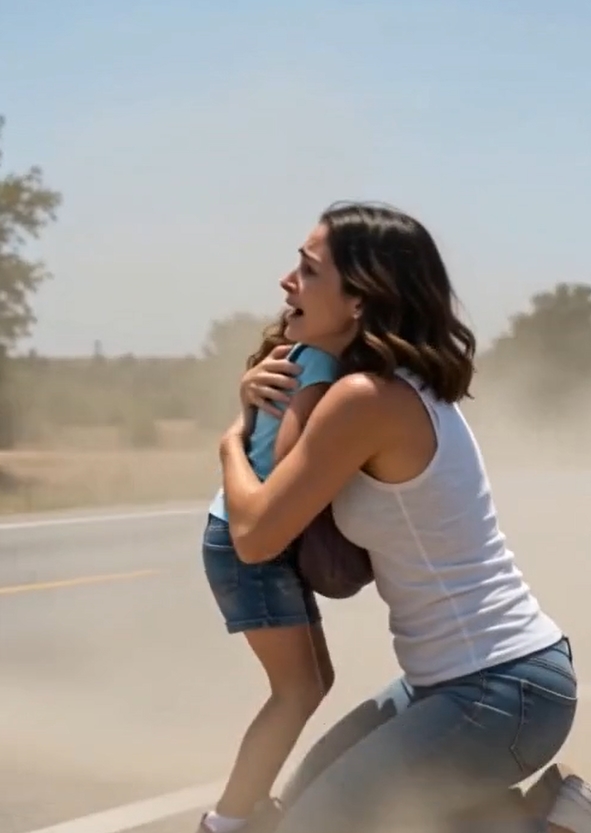
By the time her mother arrived, pale and breathless with relief, the night had fully settled, but the darkness no longer felt menacing. Her mother’s embrace was tight, a physical shield that signaled the end of the ordeal. As they walked toward the car, Lily glanced back at the man who had stopped, giving him a small, solemn wave of gratitude. She climbed into the backseat, watching the neon signs of the town shrink into the distance. She was going home, back to a place where being human—even the messy, sickness-prone parts of being human—was never a reason to be abandoned. The highway was behind her, a mere stretch of pavement that had tested her spirit, and for the first time in hours, she allowed herself to close her eyes and simply breathe, knowing that she was finally safe.