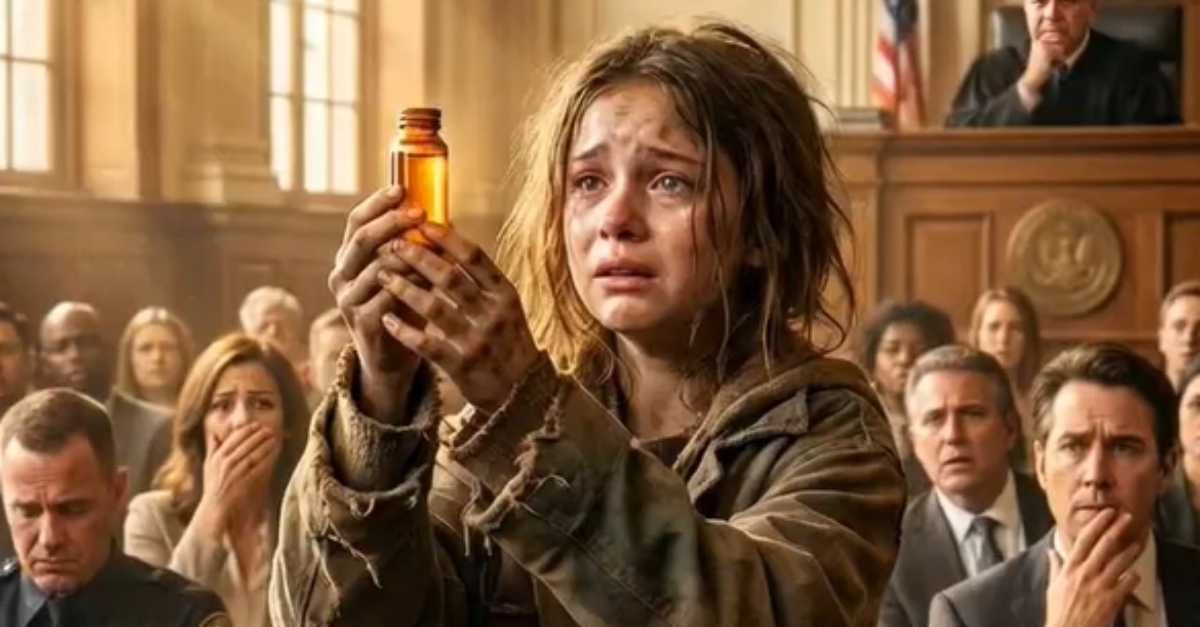
The heavy oak doors of Courtroom 4B creaked as they swung open, but the sound was instantly drowned out by a sharp, melodic shatter of silence. In the center of the polished marble aisle stood a girl no older than ten, her frame swallowed by a coat three sizes too large and stained with the soot of the lower districts. She didn’t look like a revolutionary or a thief, yet the entire assembly—from the stone-faced guards to the high-born spectators—froze as she raised a small glass vial toward the bench. The liquid inside shimmered with an iridescent blue hue, pulsing like a trapped heartbeat against the girl’s trembling palm.
“Please, Your Honor! My brother needs this! If you take it, he dies!” her voice cracked, echoing off the vaulted ceiling. Tears carved clean paths through the grime on her cheeks, and for a moment, the cold machinery of the law ground to a halt. This wasn’t just a piece of evidence in a smuggling case; it was a life held between a thumb and a forefinger. The presiding judge, a man whose reputation was built on the unwavering application of the code, leaned forward, his shadow stretching long and dark over the girl.
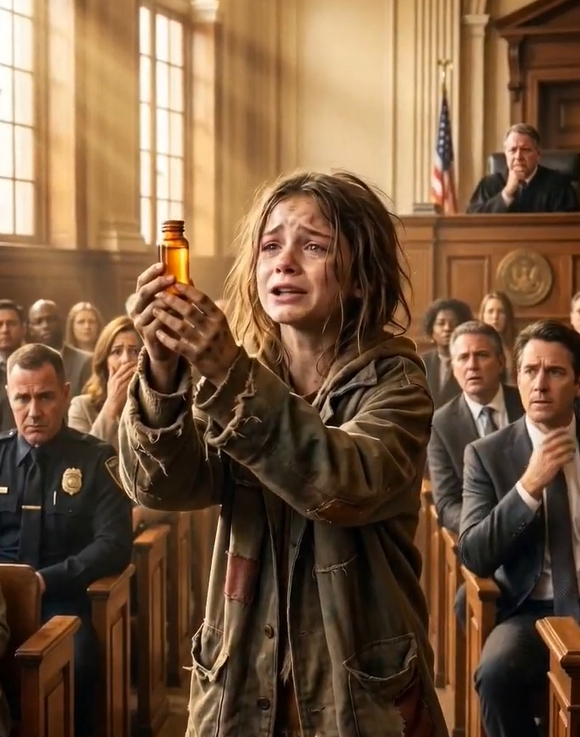
The courtroom held its breath as the Head Prosecutor stepped forward, his boots clicking rhythmically on the floor. He spoke of permits, of black-market distribution, and of the necessity of seizing “unregulated substances” to maintain the city’s order. To the court, the vial was a violation of Statute 42; to the girl, it was her brother’s final breath. She clutched the glass tighter, her knuckles white, as the guards took a tentative step toward her. The tension was a physical weight, a choice between the rigid safety of the law and the messy, desperate reality of human survival.
Suddenly, the judge raised a hand, silencing the prosecutor mid-sentence. He didn’t look at the lawyers or the bailiffs; he looked directly into the girl’s eyes, searching for the deceit he was so accustomed to finding in his chambers. Instead, he found only the raw, terrifying honesty of a child with nothing left to lose. He looked at the vial, then at the girl’s tattered sleeves, and finally at the empty chair where the defendant—a man accused of stealing medicine for the poor—had sat moments before. The law demanded the vial be entered into evidence, a process that would take weeks the boy didn’t have.
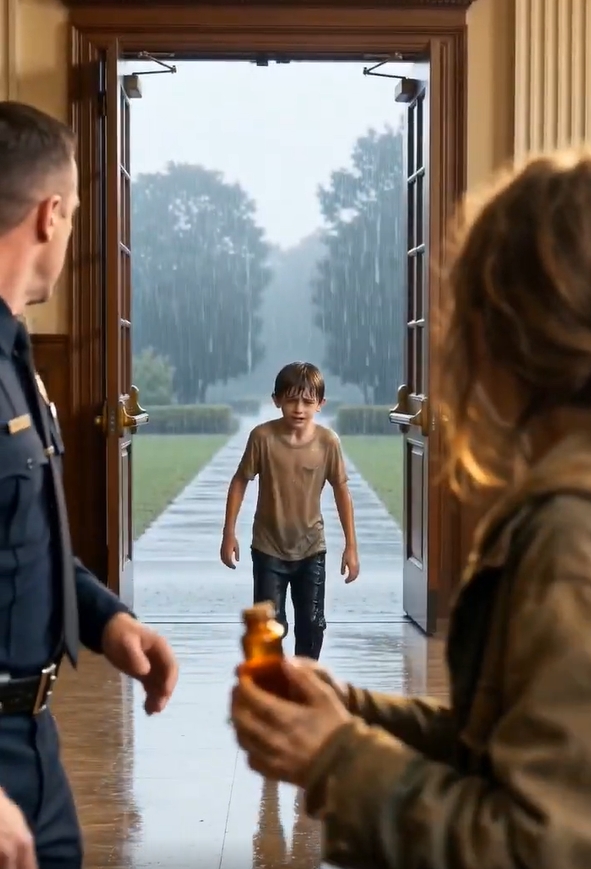
The judge cleared his throat, the sound like dry parchment rubbing together. “The court finds that the evidence in question,” he began, his voice surprisingly soft, “is currently unstable and poses a risk to the safety of the archives if stored improperly.” A confused murmur ran through the gallery, but the judge continued, his gaze never wavering from the girl. “Therefore, I am ordering an immediate field disposal. This task will be overseen by the child, who shall be escorted by a court physician to ensure the ‘neutralization’ of the substance at its intended destination.”
The prosecutor gasped, realizing the judge had just authorized the medicine’s use under the guise of a safety protocol. The girl’s eyes widened, the terror slowly replaced by a flicker of hope that shone brighter than the blue liquid in her hand. Without another word, the physician stepped forward, gently placing a hand on the girl’s shoulder and guiding her toward the exit. As the heavy doors closed behind them, the judge returned to his papers, his expression as stern as ever, while the girl sprinted toward the hospital wing, the cure held tight and the weight of the world finally lifted from her shoulders.