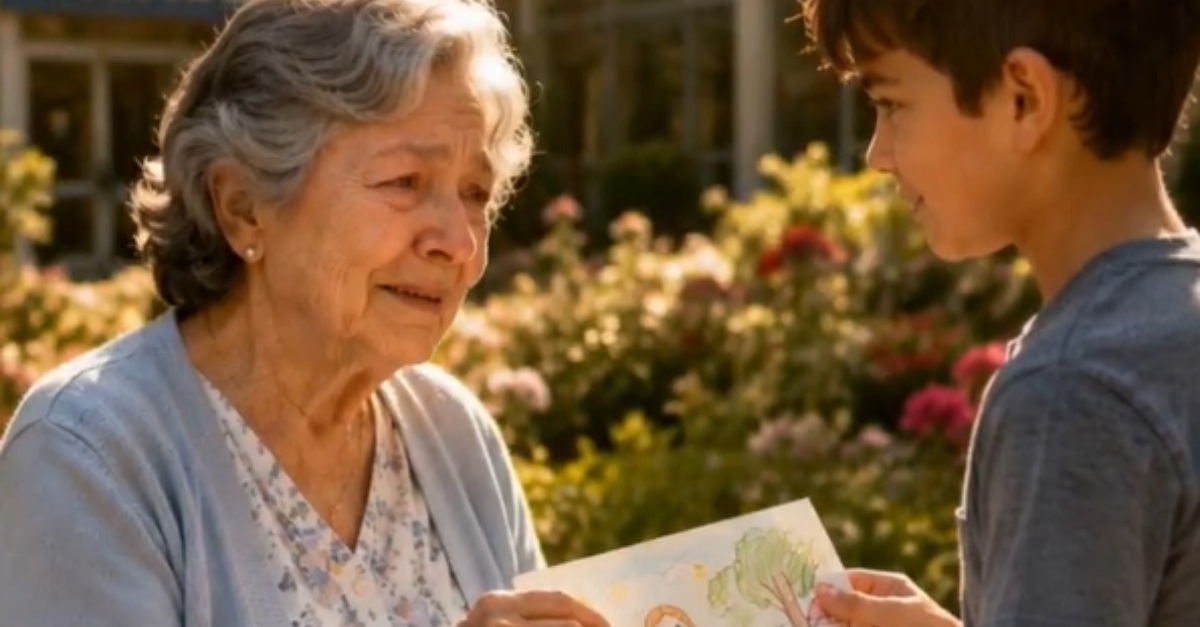
The sunlight in the hospital garden always seemed to have a different quality than the light indoors; it was softer, warmer, and smelled faintly of damp earth and blooming jasmine. For Margaret, who spent most of her afternoons on the green wooden bench near the hydrangeas, the world was a collection of these sensory flickers rather than a cohesive story. Her past was a vast, fog-covered landscape where names and dates had long ago drifted away, leaving her in a quiet, perpetual present. She sat with her hands folded in her lap, watching the butterflies dance, content but untethered, until the sound of small sneakers hitting the gravel path signaled her daily visitor.
The boy couldn’t have been more than seven years old, his hair always a bit mussed and his eyes bright with a singular purpose. He never asked her if she remembered him, nor did he seem bothered by her silence. Instead, he would simply sit beside her and pull a slightly crumpled piece of paper from his pocket. It was the same drawing every single day: a vibrant, colored-pencil sketch of a woman with silver hair, head thrown back in a wide, unrestrained laugh amidst a sea of flowers. Margaret would look at it with polite curiosity, her fingers hovering over the waxen lines, sensing a phantom warmth she couldn’t quite place.
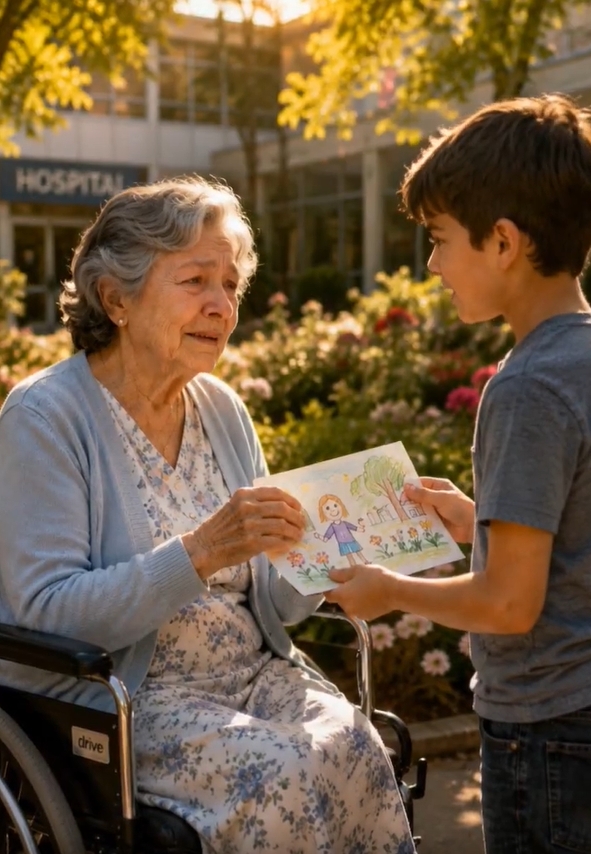
They sat together in that peaceful rhythm for weeks, the garden serving as their silent sanctuary. The boy would point to the sun in the drawing or the bright petals of the painted daisies, and Margaret would nod, a small, distant smile playing on her lips. To the nurses watching from the windows, it was a sweet gesture of youthful innocence, but for Margaret, the drawing was becoming a bridge. Each day, the image felt less like a stranger’s art and more like a mirror reflecting a version of herself that lived just beneath the surface of the fog. The repetition wasn’t a burden; it was a heartbeat, steady and grounding.
One Tuesday afternoon, the air was particularly still, and the scent of the roses was heavy and sweet. When the boy handed her the paper, Margaret didn’t just look at it. She reached out, her weathered thumb tracing the curve of the laughing woman’s cheek on the page. A sudden, sharp clarity pierced through the gray haze of her mind, like a ray of light hitting a dark room. The colors on the paper seemed to bleed into the garden around her, and the laughter in the drawing echoed in her ears. For the first time in years, the static in her head cleared, and a single, precious identity tethered itself back to her soul.
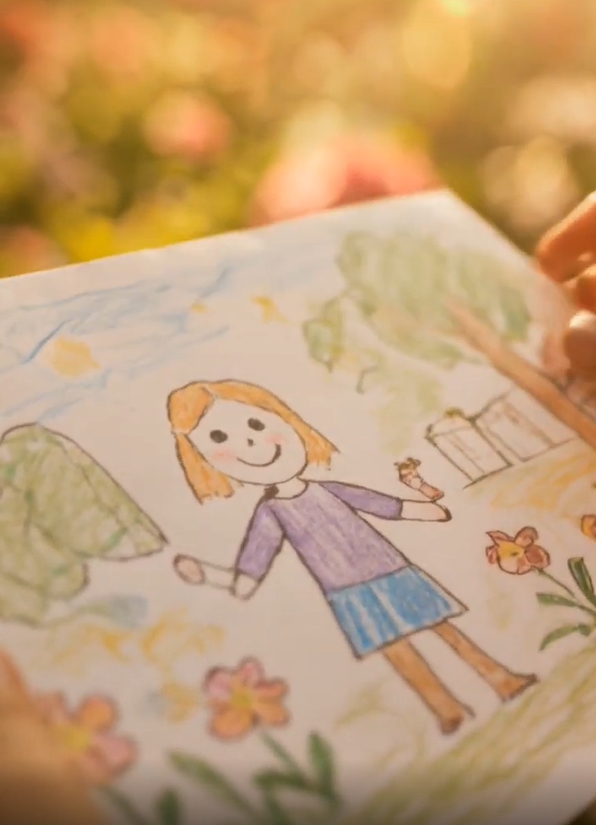
She looked at the boy, her eyes shimmering with a sudden, profound depth of emotion. Her lips trembled as she struggled to find the vibration of sound, her voice a fragile rasp that had been unused for far too long. “Home,” she whispered, the word hanging in the air like a prayer. It wasn’t just a place, but a feeling—the memory of who she was before the silence took over. The boy beamed, his small hand reaching out to squeeze hers. In that moment, Margaret wasn’t a patient or a collection of symptoms; she was a woman who had loved, laughed, and lived.
The fog didn’t vanish entirely, but the cold isolation of it was gone. As the sun began to dip below the garden wall, Margaret continued to hold the drawing, her grip firm and intentional. She knew that tomorrow might bring the shadows back, but for now, she was whole. She watched a ladybug land on the edge of the paper, feeling the warmth of the boy’s hand and the weight of her own history returning to her. The garden was no longer just a place to sit; it was a place to be found. As they walked back toward the clinic doors together, Margaret kept her eyes on the drawing, a quiet victory etched into the lines of her face.