
The streets of Sherman Oaks don’t usually stop for a man in a paint-splattered blue hoodie and gray sweatpants, but when that man is 72-year-old Mr. T, the sidewalk feels a little more solid. Gone are the forty pounds of gold and the towering Mandinka mohawk that defined an era of excess; in their place is a bright orange beanie and the quiet shuffle of a grocery run. This subdued look isn’t a retreat—it’s a victory lap. It is the relaxed posture of a man who has finally stepped out from behind a suit of armor, realizing that once you’ve commanded the world’s attention, you no longer need the noise to keep its respect.

Before the fame, there was the concrete of Chicago and a boy named Laurence Tureaud, one of twelve kids squeezed into a three-bedroom project apartment. This wasn’t a celebrity life; it was a survivalist one. As the “World’s Greatest Bodyguard,” he was the human shield for icons like Michael Jackson and Steve McQueen. But his real north star was Muhammad Ali. You can still hear the Greatest in the rhythm of his speech—that third-person cadence and rhyming flow wasn’t just theater; it was a borrowed armor of self-worth from a hero who taught him that a man from the projects could be king.

The pivot to Rocky III happened because Sylvester Stallone saw the “untapped potential” in a bouncer who refused to blink. What was meant to be a few lines became a cultural earthquake. When Clubber Lang growled, “I pity the fool,” he wasn’t just reading a script; he was venting a lifetime of Chicago grit. That moment shifted the tectonic plates of pop culture forever, proving that a man with enough character could walk onto a set and own the screen without ever losing the edge that made him dangerous.
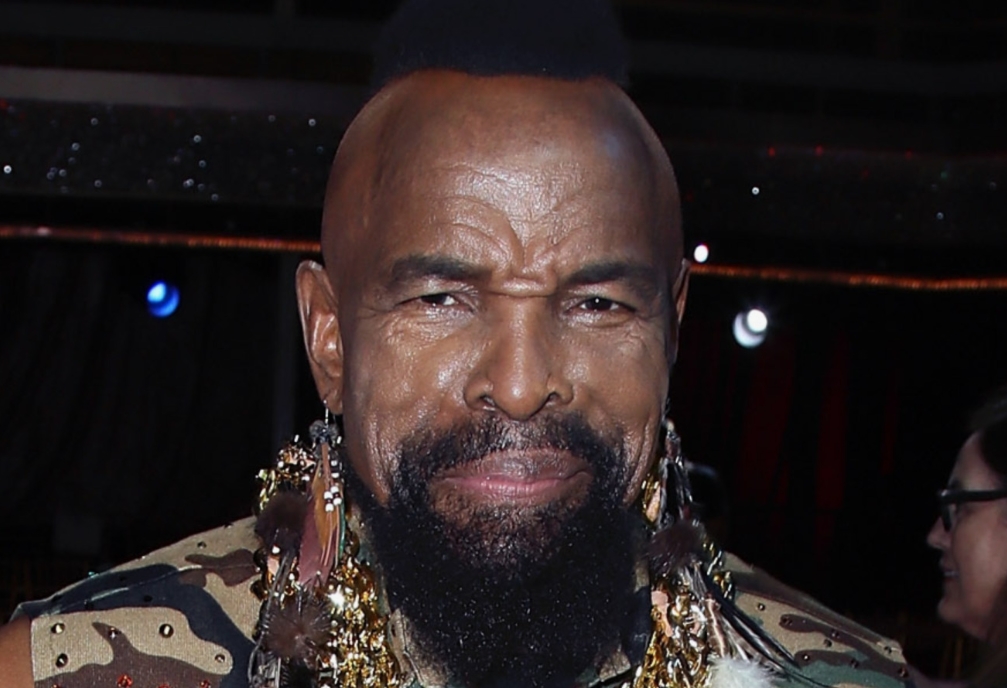
Every piece of the Mr. T persona was a calculated statement of identity. He legally changed his name so that “Mr.” would be the first word out of a stranger’s mouth—a level of deference his father and brothers were often denied in the 1970s. The gold chains he used to wear weren’t just jewelry; they were the “lost and found” from his days as a bouncer at Dingbats Discotheque. He wore the spoils of the night as a crown, a political and cultural declaration of presence. He made the world look at him, but more importantly, he made the world see him.
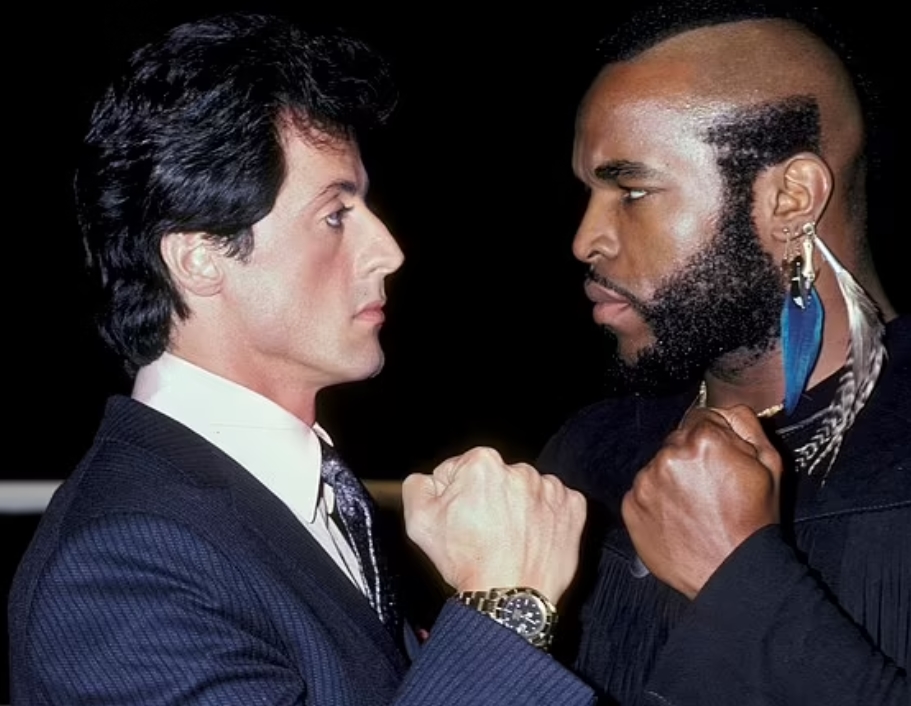
We remember him best as B.A. Baracus on The A-Team, the specialized commando with a heart of gold and a fear of flying. He became the patron saint of the “tough guy with a conscience,” a symbol of a unique era where strength was inseparable from loyalty. Today, as he moves through California in his oversized hoodie, he remains a legend who doesn’t need to shout to be heard. He didn’t just survive the eighties; he outlasted the tropes of the industry. At the end of the day, Mr. T commanded his legacy by simply demanding to be called a man.